
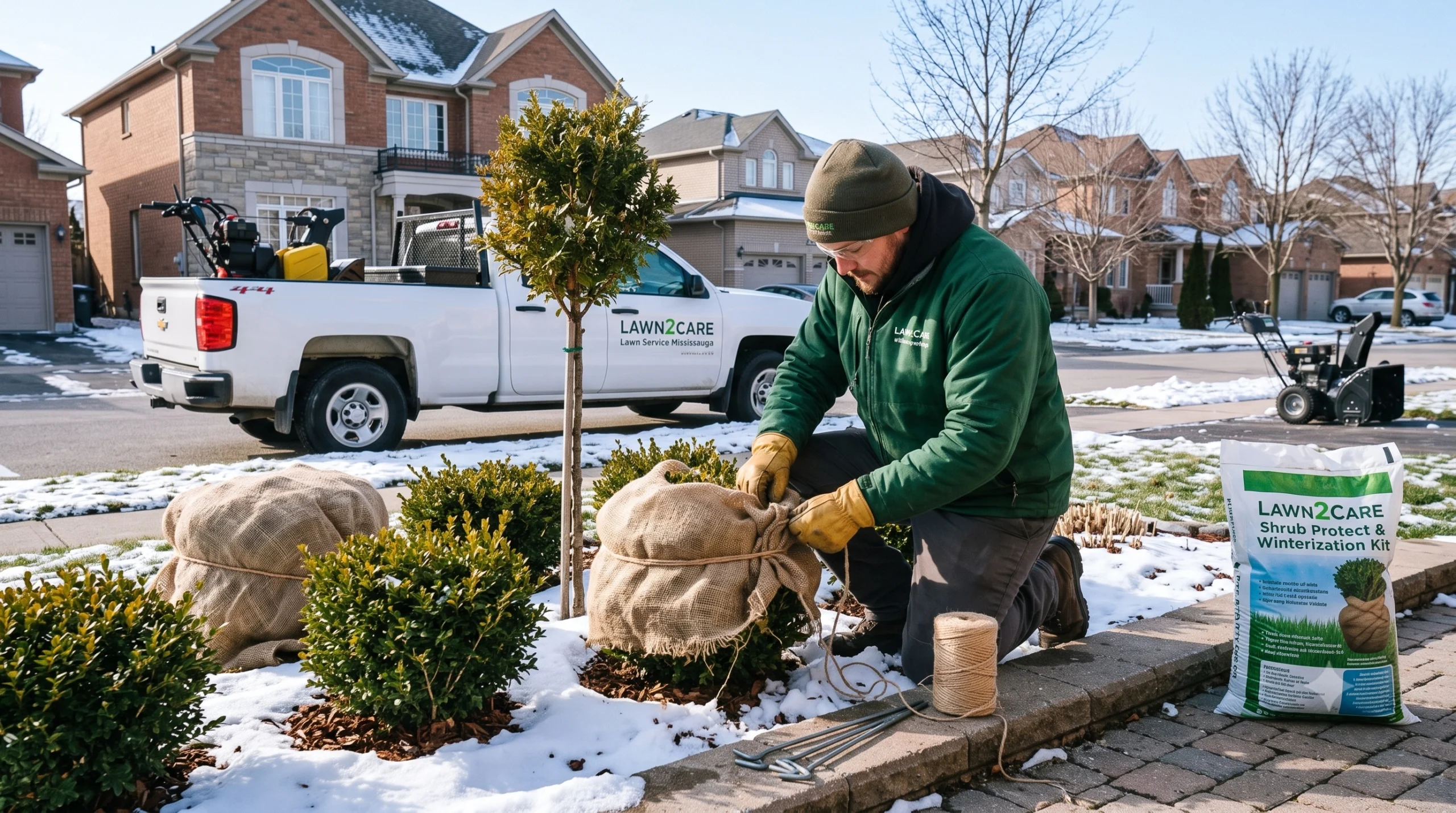
Winter Lawn Care in Mississauga: How to Keep Your Lawn Healthy Through Winter.
As the harsh Ontario weather approaches, preparing your yard for freezing temperatures is crucial. Proper winter lawn care Mississauga residents rely on can mean the difference between a lush landscape in the spring and a damaged, patchy yard. In this guide, we’ll walk you through the essential steps to protect your grass from snow mold, frost damage, and nutrient loss before the first big freeze hits the GTA.
Many homeowners think lawn care ends when the grass stops growing. In reality, winter lawn care in Mississauga starts before the first major snowfall.
A few simple steps in late fall can help protect your grass and make it easier to get your lawn green and healthy again in spring.
At Lawn2 Care, we understand that Canadian lawns need different care throughout the year. Winter maintenance is not only about removing snow. It is also about protecting the grass, soil, garden areas and overall property.
Why Winter Lawn Care Is Important in Mississauga
Mississauga experiences cold winters with snow, freezing temperatures and periods of ice. These conditions can put stress on turf.
Long periods of snow cover can also increase the risk of winter turf diseases. Ontario’s turfgrass guidance notes that some snow mould diseases can develop under extended snow cover, particularly when turf is weakened.
Winter can also bring another problem: road salt.
Salt used on roads, sidewalks and driveways can reach nearby grass. Mississauga recommends removing snow and ice first and using salt carefully, while also suggesting alternatives where possible.
This is why preparing your lawn before winter can make a noticeable difference.
1. Give Your Lawn a Final Fall Mow
One of the most important steps before winter is giving your grass a proper final mow.
Avoid leaving the lawn excessively long going into winter. At the same time, you don’t want to cut it extremely short.
A reasonable approach is to keep the grass at a healthy height during the final mowing period and remove excessive leaves from the lawn.
Ontario guidance recommends maintaining turf around 2–3 inches with a sharp mower blade as part of general lawn maintenance.
A clean lawn going into winter can also help reduce the amount of wet, matted vegetation sitting underneath snow.
2. Remove Leaves and Lawn Debris
Fall leaves look beautiful, but a thick layer of leaves left on the grass for a long time can block light and airflow.
Before winter arrives:
- Rake or remove heavy leaf buildup
- Remove branches and garden debris
- Clear leaves from lawn edges
- Clean around walkways and driveways
- Remove objects that could damage the grass under snow
This simple step is often overlooked in lawn maintenance in Mississauga, but it can help your lawn enter winter in better condition.
3. Avoid Walking on Frozen or Snow-Covered Grass
Your lawn may look strong under a layer of snow, but repeated foot traffic can cause problems.
Try to avoid walking across the same areas of the lawn during winter, especially when the grass is frozen.
Heavy traffic can flatten grass and compact the soil.
If you have children, pets or frequently used outdoor areas, consider creating a clear pathway so the lawn receives less winter traffic.
This is particularly useful for residential properties where the same section of grass is used regularly.
4. Be Careful With Road Salt
Salt is one of the biggest concerns for lawns close to roads, sidewalks and driveways.
When snow melts, salty water can move into the soil around the grass. This can stress plants and turf.
The City of Mississauga recommends shovelling and scraping snow and ice first before applying salt and sweeping up leftover salt.
Ontario also recommends using de-icing chemicals conservatively and applying only the amount needed for the job.
What can you do?
If possible:
- Remove snow mechanically first
- Avoid unnecessary salt use near grass
- Sweep up excess salt
- Keep snow containing heavy road salt away from garden areas
- Consider suitable traction alternatives where practical
If your lawn borders a sidewalk or driveway, pay extra attention to salt runoff during winter thaws.
5. Manage Snow Carefully
Snow itself is not necessarily bad for your lawn. A layer of snow can actually provide insulation from extremely cold temperatures.
The problem can come from how snow is handled.
Avoid creating large, heavy piles on the same section of lawn throughout the winter.
Mississauga advises residents to keep snow on their own property rather than pushing it onto the road, because snow placed on roads can create safety and drainage problems.
When clearing your driveway or walkway, choose a snow storage area that causes the least damage to your lawn and landscaping.
6. Keep Snow Away From Important Drainage Areas
Winter snow eventually becomes water.
If snow and ice block drainage areas, melting water can collect around your property.
The City of Mississauga recommends keeping private storm drains, catch basins and downspout extensions clear during winter and checking them during thaws.
Good drainage is important because standing water can create problems when temperatures change between freezing and thawing.
7. Don’t Fertilize Your Lawn at the Wrong Time
Winter is not the time to keep pushing grass to grow.
As temperatures drop and grass becomes dormant, lawn care should focus more on protecting the existing turf than forcing new growth.
Ontario’s turf management guidance recommends avoiding nitrogen applications too close to dormancy because excessive late-season growth can make turf more vulnerable to winter problems.
For this reason, fertilizer timing should be based on the grass type, soil condition and local growing conditions rather than simply adding fertilizer because winter is approaching.
8. Watch for Winter Lawn Diseases
After the snow melts, you may notice circular or irregular patches of damaged grass.
Sometimes this is caused by winter turf diseases such as snow mould.
Ontario’s turfgrass information explains that some snow mould diseases can develop under prolonged snow cover and become visible after the snow melts.
Don’t immediately assume that every brown patch means the grass has died.
After the lawn dries, inspect the affected area. Lightly raking matted grass can help improve air movement and drying.
If the damage is severe, professional lawn assessment may be useful.
9. Prepare Your Lawn for Spring
Good winter lawn care should make your spring lawn care easier.
Once snow has completely melted and the ground is suitable for maintenance, inspect your lawn for:
- Salt damage
- Bare patches
- Compacted soil
- Snow mould
- Damaged grass
- Drainage problems
- Weeds
- Areas damaged by snow removal
Spring is a good time to decide whether the lawn needs aeration, overseeding, soil improvement or other maintenance.
Ontario guidance recommends aerating in spring and fall and overseeding in early spring or late fall as part of general lawn maintenance.
Winter Lawn Care and Snow Removal in Mississauga
For many homeowners, winter lawn care and snow removal go together.
A good snow removal plan helps keep:
- Driveways accessible
- Walkways safer
- Entrances clear
- Snow piles under control
- Grass protected from unnecessary damage
Lawn2 Care provides lawn and property maintenance services throughout the year, including winter snow removal. The company’s existing Mississauga-focused content describes its services as covering lawn care, landscaping and winter snow removal.
For commercial properties, winter maintenance is especially important because Mississauga property standards require owners of multi-unit residential, commercial and industrial properties to keep ramps, sidewalks and parking areas clear of ice and snow.
Common Winter Lawn Care Mistakes to Avoid
Here are some mistakes homeowners in Mississauga should try to avoid.
Leaving thick leaves on the grass
Leaves can create a wet, matted layer that reduces airflow.
Using too much salt
More salt does not always mean better ice control. Use the minimum amount needed and clean up excess salt where practical.
Repeatedly walking on frozen grass
Heavy traffic can damage turf and compact soil.
Piling all snow in one place
Large, repeated snow piles can put extra stress on grass and landscaping.
Ignoring drainage
Blocked drains and downspouts can cause water to collect during winter thaws.
Waiting until spring to think about lawn care
The best time to protect your lawn is before winter damage happens.
Winter Lawn Care Checklist for Mississauga Homeowners
Before winter arrives, use this simple checklist:
☐ Give the lawn a final seasonal mow
☐ Remove heavy leaves
☐ Remove branches and debris
☐ Clean garden beds
☐ Check downspouts and drainage
☐ Plan where snow will be stored
☐ Avoid unnecessary salt near grass
☐ Reduce foot traffic on frozen lawns
☐ Keep sidewalks and driveways clear
☐ Check your lawn after the snow melts
Following these simple steps can help your lawn handle the Canadian winter and recover more easily when spring arrives.
Why Choose Lawn2 Care for Winter Property Maintenance?
Winter property care requires more than simply pushing snow away.
At Lawn2 Care, the goal is to help homeowners and property managers maintain their outdoor spaces throughout the year. From seasonal lawn maintenance to winter snow removal, having a planned approach can make property care easier during Canada’s colder months.
If you are looking for winter lawn care or snow removal in Mississauga, professional seasonal maintenance can help you spend less time worrying about your property and more time enjoying your winter.
Frequently Asked Questions About Winter Lawn Care in Mississauga
1. Should I mow my lawn before winter in Mississauga?
Yes. A final seasonal mow is generally recommended before the lawn becomes dormant. Avoid leaving excessive grass height going into winter.
2. Is snow bad for my lawn?
Not necessarily. Snow can provide insulation for grass. Problems can occur from prolonged snow cover, heavy traffic, poor drainage, or snow and salt being repeatedly piled on the same area.
3. Can road salt damage my lawn?
Yes. Salt can reach soil around grass and plants through snow and meltwater. Mississauga recommends using salt carefully, removing snow and ice first, and sweeping up leftover salt.
4. How can I protect my lawn from salt damage?
Try to remove snow mechanically before using de-icing products, avoid unnecessary salt near grass, and clean up excess salt where practical.
5. Should I walk on my lawn when it is frozen?
It is better to avoid unnecessary foot traffic on frozen grass, especially if the same area is used repeatedly.
6. What should I do with snow from my driveway?
Keep snow on your property and choose a location that does not repeatedly cover or damage the same lawn area. Mississauga advises residents not to shovel snow onto the road.
7. Can lawn disease develop under snow?
Yes. Certain snow mould diseases can develop under prolonged snow cover. Damage may become visible after the snow melts.
8. When should I start lawn care again in spring?
Start by inspecting the lawn after the snow has completely melted and the ground is suitable for maintenance. Look for salt damage, bare patches, compaction and drainage issues before beginning spring treatments.
9. Do I need professional winter lawn care in Mississauga?
It depends on your property and how much maintenance you can handle yourself. Professional lawn care and snow removal in Mississauga can be useful for homeowners, landlords and commercial property managers who want regular seasonal maintenance.
10. Does Lawn2 Care provide winter services in Mississauga?
Lawn2 Care offers year-round property maintenance services, including winter snow removal, according to its Mississauga-focused service content.
